






Our Blog
12 Sustainable Retail Strategies for 2025
Written by: Parcel Pending
8 Min Read
Published: March 26, 2024
Updated: December 2, 2025
Sustainability has become a significant concern among both retailers and consumers. A Unilever study reveals a third of consumers are now buying from brands based on their social and environmental impact.1
Gen Z in the UK is more likely to adopt sustainable practices and uphold sustainable values than any other consumer demographic group. A recent survey by ThredUp found that 64% of Gen Z consumers have purchased second-hand fashion items, and 73% are willing to pay more for sustainable fashion.2 With Gen Z’s spending power exceeding £100 billion, it’s no surprise that retailers are seeking ways to make their businesses more sustainable to attract these and other environmentally conscious consumers.3
A Pivot to a Circular Economy
The circular economy and sustainability go hand in hand. The goal of the circular economy, a common retail sustainability initiative, is to pivot away from mining resources, turning them into products, and then turning them into waste. Instead, a circular economy reduces material use, and redesigns materials, products, and services to be less resource-intensive. Sustainable practices help businesses wanting to participate in the circular economy recapture “waste” as a resource to manufacture new materials and provide more sustainable product options. According to a recent report: “every percentage point increase in the circular economy market – including renting, reselling, repairing, refurbishing – could save 13 million tons of CO2 equivalent.”4
Fuelling this shift for sustainable retailing is an emerging “deinfluencing” social media trend urging followers to stop impulse buys on Instagram, X (formerly Twitter), and TikTok that harm the environment. The deinfluencing tag has been viewed over 322 million times on TikTok alone!5 “Anti-haul” posts are also showing up as a backlash to bulk orders (also known as hauls) from fast fashion retailers such as Zara, Temu, H&M, and Shein, which are accused of contributing to the “one and done” mentality of wearing it once and disposing of the item. Statistics show that 57% of discarded apparel ends up in landfills.
Sustainability Strategy Ideas
McKinsey & Company’s The State of Fashion 2024 highlights two burgeoning sustainability development issues: climate change and sustainability laws.6 The consulting company implores manufacturers and retailers to embrace sustainable retail practices in their supply chain and other business operations to reduce emissions and revamp business models that rely on outdated environmental procedures. Here are eight sustainability practices and sustainable retail design elements to explore for your retail business in 2024 and the years to come:
#1 Join an Open Locker Network
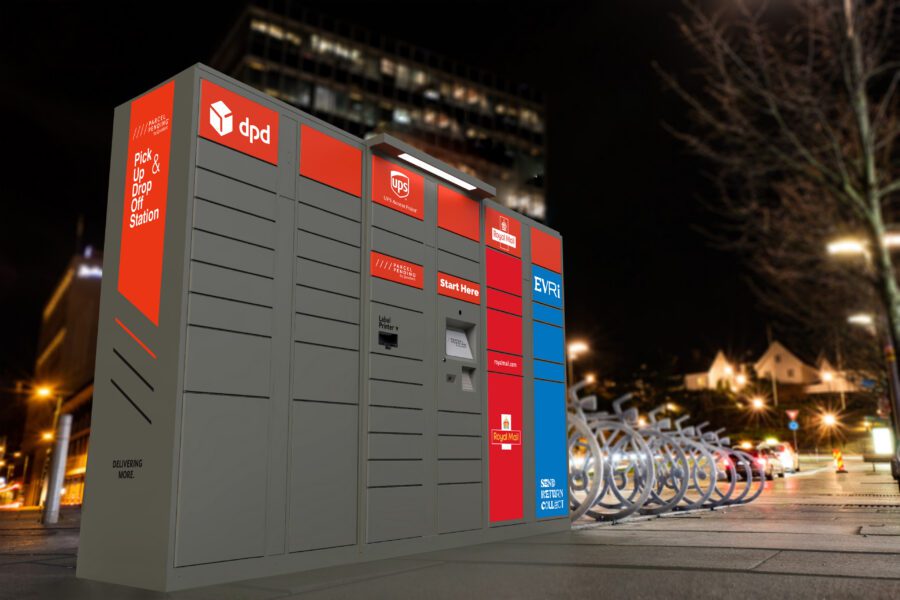
Becoming an open locker network host is a lower-risk, cost-effective way for a retailer to implement smart lockers for click-and-collect and retail returns – without each store having to pay for and install its own electronic locker configuration. Open locker networks are installed and maintained by a provider (such as Parcel Pending by Quadient) and are carrier and retailer-agnostic. This means any open retail locker network participants can leverage the self-service parcel locker solutions for secure, 24/7 order collections and returns. In short, open locker networks optimise delivery and return process operations for a more sustainable product return process, reducing the number of delivery vehicles on the road and minimising the associated carbon emissions created by your supply chain. These networks streamline delivery routes for retailers and carriers, making deliveries and returns more efficient and eco-friendly and helping meet government and company-set sustainability goals.
#2 Explore a Rental Model
Rentals also fill the demand for sustainable retailing, allowing one item to be used multiple times. IKEA, Home Depot, Lowe’s, and Rent the Runway allow one item to be used many times by consumers (e.g., tools, clothing, furniture). Learn more about how smart lockers can play a role in your sustainable development initiatives and support retail rental schemes here.
#3 Recycle Your Customers’ Used Goods
The resale market is exploding – whether it’s labelled re-commerce, second-hand, used, pre-owned, pre-loved, resale, vintage, or antique. The global second-hand apparel market is expected to reach $350 billion by 2027, according to resale site thredUP, up from $177 billion in 2022.7 And the resale market is rapidly growing in the UK, with the second-hand apparel market expected to reach £7 billion by 2025, according to a report by GlobalData. This is up from £2.5 billion in 2019.8
Well-loved fashion brands are creating their own resale market under a variety of sub-brand labels, including Eileen Fisher (Renew), Lululemon (Like New), REI (ReSupply), North Face (Renewed Take Back) and John Fluevog (The Fluemarket). These exchanges allow the apparel brands to retain revenue that might otherwise go to other used marketplaces such as Vinted, Depop, and Vestiaire Collective, while also helping the environment. This ingenious retail sustainability initiative also keeps shoppers loyal as virtually all labels noted above only provide store or brand credit for future purchases, never a cash payment.
#4 Reduce Your Carbon Footprint
Shipping costs account for 14% of global greenhouse emissions.9 Many 3PL (third-party logistics) providers can implement more sustainable options.
#5 Build a More Sustainable Supply Chain
Sustainability starts well before a product reaches your store shelves or a customer’s hands. Your supply chain is one of the most critical—and often overlooked—areas for reducing environmental impact.
A 2023 McKinsey report found that supply chains are responsible for more than 90% of retailers’ greenhouse gas emissions and up to 80% of their total environmental impact.16
That’s why retailers are reviewing their suppliers, shipping practices, and product materials with sustainability in mind.
Simple strategies include sourcing goods from local or regional suppliers to reduce emissions from transport, choosing vendors with environmental certifications, and selecting low-emission or carbon-neutral logistics providers. These small changes can lead to big savings—both in emissions and operational costs—while also improving transparency for your customers.
#6 Recycle and Upcycle Everything
Returns, unsold inventory, samples, and deadstock can easily find their way into valuable purposes. Besides donating to a worthy charity, look at upcycling items to make a new item. Patagonia, for example, goes beyond merely accepting worn garments through its Worn Wear program and repairs and repurposes objects, saving an estimated 120,000 items that might have ended up as waste.1Urban Outfitters, too, has a sustainable development program that creates upcycled vintage items that are reimagined and redesigned.
#7 Empower Your Team with Sustainability Training
A successful sustainability strategy isn’t just about products and processes—it’s about people, too. Educating employees on your sustainability goals helps create a company-wide culture of environmental responsibility.
Retailers are increasingly offering training on topics like proper recycling procedures, energy-saving behaviours, and sustainable product knowledge. Some brands are even appointing “green champions” in each department to lead by example and encourage eco-friendly initiatives13
This kind of engagement empowers employees to make more sustainable choices in their daily work—and positions them to share those values with their customers. When your team is aligned, your impact grows.
#8 Eliminate Paper
The days of long CVS receipts should be over; it’s time to start delivering e-receipts to your customers as one of your sustainability goals. Digital receipts not only help your shoppers easily retrieve them for returns but also saves paper. And the best perk? Emailing receipts is the first step towards building a robust email marketing strategy.
#9 Leverage Technology
Several UK retailers are using “try-on” technology to reduce returns and promote sustainability. For example, ASOS and Marks & Spencer are using augmented reality to allow customers to virtually try on clothes, while Glasses Direct is using a virtual try-on feature for eyeglasses. The National Retail Federation estimates that UK consumers will return £5.5 billion worth of goods in 2022, representing a double-hit to sustainability as returned items are often shipped using non-renewable energy and can end up in landfills. 11 Better educating shoppers, providing detailed product information, and using technological advancements can all contribute towards your company’s sustainability priorities as well as an eco-friendly approach to retailing in the UK.
#10 Go Beyond Hardware with Smart Sustainability Tech
Technology is a powerful enabler of sustainability—and not just in the form of physical solutions like smart lockers or digital receipts. Many retailers are turning to advanced software tools to help them operate more efficiently and reduce their environmental impact.
Cloud-based inventory and POS systems typically consume less energy than on-premise servers and allow for real-time optimisation. Artificial intelligence (AI) and data analytics can forecast demand more accurately, helping retailers avoid overproduction and reduce waste.
Retailers using smart technology have reported a 20–30% decrease in excess inventory.14 This not only supports sustainability targets but also improves profitability. As a bonus, it gives your teams better visibility into your operations—making it easier to track, measure, and report on your progress.
#11 Ship Goods Using Compostable and Recycled Materials
Each year, 420 million tons of paper and cardboard are produced.12 Source post-consumer paper for shipping and encourage recycling in marketing messages. Investigate compostable, recyclable, or reusable supplies. Small changes to your sustainable retail design like these can have a big (and positive!) environmental impact.
#12 Back It Up with Data and Metrics
Sustainability isn’t just about making greener choices—it’s about measuring impact and sharing progress. Transparent data builds customer trust and supports compliance with emerging regulations on sustainability reporting.
Leading retailers are tracking metrics such as total carbon emissions, waste diversion rates, and emissions saved from optimised deliveries or parcel locker usage. Others are measuring the percentage of resale or returned goods reintegrated into the product lifecycle through recycling or upcycling.
A recent IBM study found that brands reporting on sustainability progress are more likely to retain eco-conscious customers.¹ Whether it’s through dashboards, annual reports, or marketing communications, sharing your metrics shows accountability—and that’s something customers respect.15
Consumer interest in climate change and sustainability is not a trend, rather, it’s a permanent part of their thinking. They will spend more dollars and remain loyal to retailers implementing sustainability goals and changes that favour the environment.
Ready to learn more about how smart lockers can make your retail operations more sustainable? Contact one of our parcel management experts today.
Sources:
- Case, Scot. Top 10 sustainable consumer research findings. nrf.com. April 19, 2023. https://nrf.com/blog/top-10-sustainable-consumer-research-findings
- Sustainable Brands. SB Socio-Cultural Trends Research™. pages.sustainablebrands.com. October 7, 2023. https://pages.sustainablebrands.com/socio-cultural-research
- Liu, Chuanlan, Jeremy M. Bernardoni, and Zhongjie Wang. 2023. “Examining Generation Z Consumer Online Fashion Resale Participation and Continuance Intention through the Lens of Consumer Perceived Value” Sustainability 15, no. 10: 8213. https://doi.org/10.3390/su15108213
- Pollard, Amelia. Gen Z Has $360 Billion to Spend, Trick is Getting Them to Buy. www.bloomberg.com. November 17, 2021. https://www.bloomberg.com/news/articles/2021-11-17/gen-z-has-360-billion-to-spend-trick-is-getting-them-to-buy
- Berg, A., Granskog, A., Lee, L., et al. Fashion on climate. www.mckinsey.com. August 26, 2020. https://www.mckinsey.com/industries/retail/our-insights/fashion-on-climate
- Johnson, Arianna. Rise of the Deinfluencer: Growing Social-Media Movement Challenges Influencers And Consumerism. www.forbes.com. March 8, 2023. https://www.forbes.com/sites/ariannajohnson/2023/03/08/rise-of-the-deinfluencer-growing-social-media-movement-challenges-influencers-and-consumerism/?sh=acad7b74a444
- Balchandani, A., Starzynska, E., Barrelet, D., et al. The State of Fashion 2024: Finding pockets of growth as uncertainty reigns. www.mckinsey.com. November 29, 2023. https://www.mckinsey.com/industries/retail/our-insights/state-of-fashion
- ThredUP. 2023 Resale Market and Consumer Trend Report. www.thredup.com. April 5, 2023. https://www.thredup.com/resale
- Damen, Alexis. Sustainable Retail: 15 Steps to Success with Examples. www.shopify.com. September 20, 2023. https://www.shopify.com/retail/sustainability-retail
- Weavabel. 9 Brands That Are Embracing Fashion Upcycling. www.weavabel.com. January 3, 2022. https://www.weavabel.com/blog/brands-that-are-embracing-fashion-upcycling
- Poe, Sheryll. How reverse logistics makes the retail cycle go around. nrf.com. November 8, 2023. https://nrf.com/blog/how-reverse-logistics-makes-retail-cycle-go-around
- The World Counts. Tons of paper produced in the world, this year. www.theworldcounts.com. n.d. https://www.theworldcounts.com/challenges/consumption/other-products/environmental-impact-of-paper
- 6 Examples of retailers driving sustainability with employee ideas.” ideas.sideways6.com. September 9, 2025.
https://ideas.sideways6.com/article/examples-of-retailers-driving-sustainability-through-employee-ideas - Hanbury, Mary. “Big Retailers Use AI to Prevent Inventory Shortages.” www.businessinsider.com. October 16, 2025.
https://www.businessinsider.com/walmart-target-use-ai-to-prevent-inventory-shortages-2025-6 - IBM Releases 2023 Impact Report.” newsroom.ibm.com. April 11, 2023.
https://newsroom.ibm.com/2023-04-11-IBM-Releases-2023-Impact-Report - Charting paths to decarbonized value chains: What lies beneath retail’s carbon emissions.” www.mckinsey.com. September 30, 2024.
https://www.mckinsey.com/featured-insights/week-in-charts/what-lies-beneath-retails-carbon-emissions